


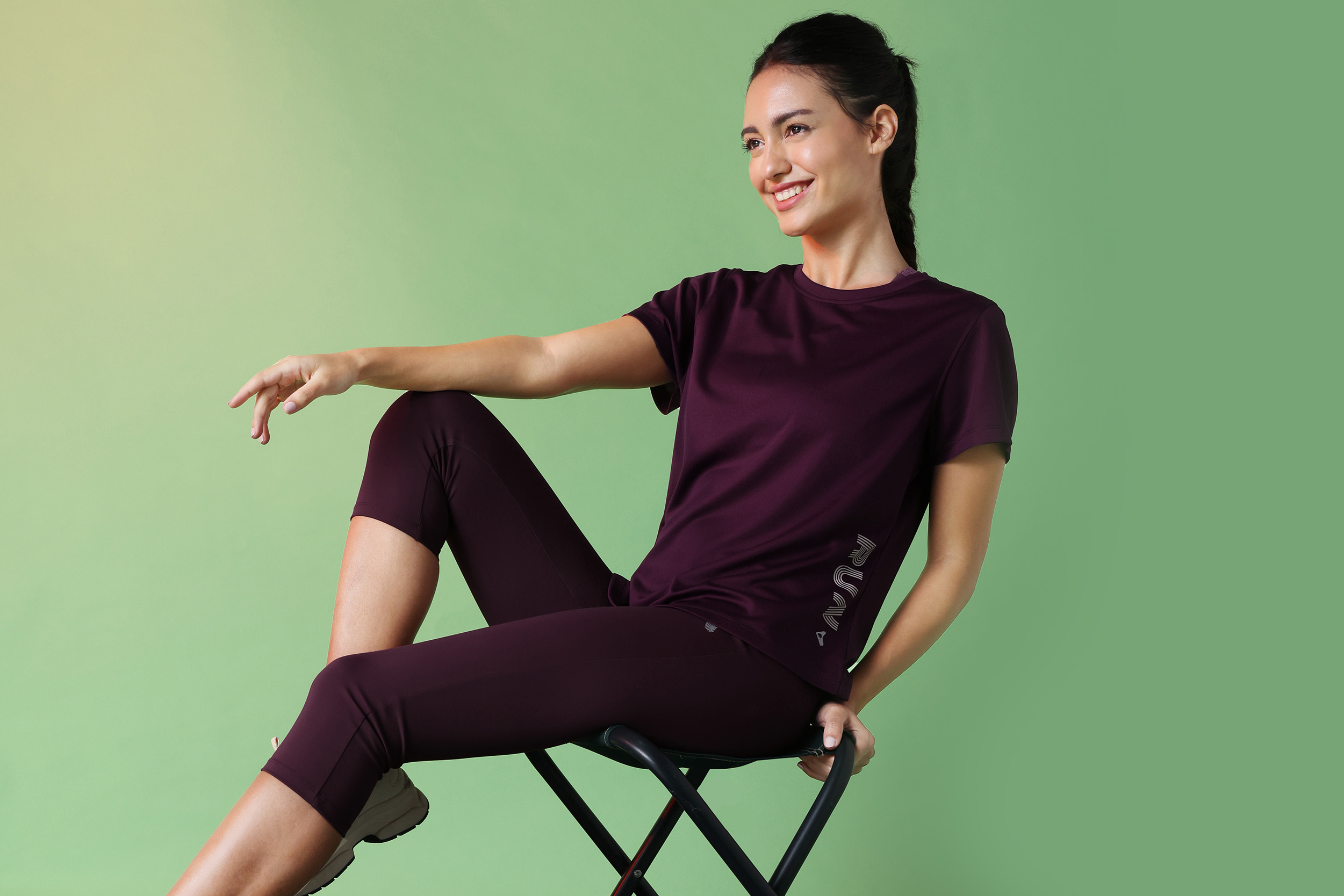
Compression leggings may look like regular activewear, but their structured fit is designed to do more than stretch with you. Compression leggings use firm, elastic fabric to provide controlled pressure around the legs. They can offer muscle support during workouts, a secure feel during active days and added comfort after exercise. The benefits, however, depend on the design, fit and compression level.
Let us understand what are compression leggings, how they work, and when you can wear them.
What Are Compression Leggings?
Compression leggings are close-fitting activewear leggings made to feel firmer and more supportive than regular leggings.
They usually use a dense compression fabric made with materials such as nylon, polyester and elastane. A high-elastane blend gives them enough stretch while keeping the fabric close to the body.
Unlike regular leggings, they are designed to provide a certain level of pressure. This structured fit can make your legs feel more supported while you move.
Not every pair offers the same compression level, and not all sports leggings use graduated compression. Sports compression wear is also different from medical compression garments, which provide measured pressure for specific medical needs.
How Do Compression Leggings Work?
Muscle support leggings apply gentle, controlled pressure that gives you that snug, held-in feeling as you move — reducing excess muscle vibration so running, cycling, or strength training feels more secure. Some designs go further with graduated compression, firmer at the lower leg and easing towards the thighs, which may also support circulation. The effect really comes down to construction, pressure, and fit — good compression should support your movement, never restrict it.
What Are the Benefits of Compression Leggings?
The main compression leggings benefits are linked to support, comfort and a secure fit.
- Muscle support: Creates a firm, supported feeling around the legs.
- Reduced muscle movement: May limit some muscle vibration during exercise.
- Post-workout comfort: May make normal post-workout soreness feel more manageable.
- Lower-body support: Provides a secure feel during active movement and may help with leg fatigue.
- Secure fit: Helps keep leggings in place while you exercise.
- Sweat management: Moisture-wicking fabric can help move sweat away from the skin.
- Temporary smoothing: Creates a streamlined appearance.
- Everyday comfort: Can provide extra support on active days.
Compression Leggings vs Regular Leggings: What’s the Difference?
Wondering how compression leggings vs regular leggings compare? Here is a quick comparison.
|
Feature |
Compression Leggings |
Regular Leggings |
|
Fit |
Firm and structured |
Soft and flexible |
|
Fabric |
Dense, high-elastane blend |
Lighter performance blend |
|
Pressure |
Controlled and supportive |
Little or no compression |
|
Main purpose |
Muscle support and movement |
Comfort, style or light activity |
|
Feel |
Secure and held-in |
Relaxed and stretchy |
|
Best suited for |
Workouts, recovery or active days |
Lighter exercise
|
When Should You Wear Compression Leggings?
One of the best things about compression wear for women is that it can fit into different parts of an active lifestyle.
Running or cardio: A secure fit can feel supportive during repetitive movement.
Gym training: Compression leggings for gym workouts can provide muscle support while allowing the flexibility needed for exercises such as squats and lunges.
Yoga or stretching: Choose a pair with enough stretch for unrestricted movement. A four-way stretch can be particularly useful here.
After exercise: Some people prefer compression styles for their snug feel during exercise recovery.
Travel or desk work: They can feel comfortable during active days or while sitting, as long as the pressure feels comfortable.
Everyday wear: Compression tights for women can work beyond workouts when you prefer a more structured fit.
There is no fixed amount of time you need to wear them. Follow the product guidance and, most importantly, listen to your body.
How Should Compression Leggings Fit?
Getting the fit right starts with sizing — and going a size down isn’t a shortcut to better support, it just means discomfort. The right pair should feel firm and snug, never painfully tight, with a waistband that stays put without digging in and fabric that sits smooth instead of rolling or bunching.
A simple check: can you walk, sit, squat and stretch without a fight? Pain, numbness, tingling, or any colour change in your skin is your cue to take them off. Always go by the brand’s size chart rather than guessing.
For workouts specifically, look for breathable, moisture-wicking fabric with real stretch — leggings that move with you, not against you.
Are Compression Leggings the Same as Medical Compression Garments?
No. Sports leggings and medical compression garments have different purposes.
Workout compression leggings offer general support and a snug fit. Medical garments provide measured compression, usually stated in mmHg, for specific circulation-related needs.
If you have circulation problems, persistent swelling, are pregnant or have recently had surgery, speak to a healthcare professional before using medical compression garments. Certain arterial conditions can also make medical compression unsuitable.
In short, sports compression leggings should not be treated as a replacement for medically prescribed compression.
Conclusion: How to Choose the Right Compression Leggings
Compression leggings use firm fabric to apply pressure around the legs, creating a supportive and secure feel during movement. Whether you choose them for workouts, recovery or active days, focus on a comfortable fit, breathable fabric and the right compression level.
Explore Zivame’s activewear leggings, workout leggings and women’s sportswear to find styles that support your movement while keeping comfort at the centre.
FAQs About Compression Leggings
- What are compression leggings used for?
Compression leggings are designed to provide a firm, supportive feel during workouts, recovery or active days.
- How do compression leggings work?
They apply gentle pressure around the legs, helping provide muscle support and a secure feel while you move.
- What is the difference between compression and regular leggings?
Compression leggings have a firmer, more structured fit, while regular leggings are generally designed for comfort and flexibility.
- Are compression leggings good for workouts?
Yes. They can provide a secure fit and support during activities such as running, gym training and cycling.
- Can compression leggings help with muscle soreness?
They may make post-workout soreness feel more comfortable, although they do not guarantee faster recovery.
- How tight should compression leggings feel?
They should feel firm and supportive, but never painfully tight or restrictive.
- Should you size down in compression leggings?
No. Follow the brand’s size chart instead. Sizing down does not mean better compression.
- Are compression leggings the same as medical compression garments?
No. Sports compression leggings offer general support, while medical garments provide measured compression for specific medical needs.

Team Zivame
As the curtain falls on the old year and the spotlight shines on the new, it’s time for more t
Raindrops drumming against your windowpane, cool breeze, and a cup of hot cocoa – it’s the p

We all love a weekend getaway or two, but sometimes you just want to stay home as you cool yourself